Gambonanza
- 4.8
- Rating
- 50.00K
- Installs
- $5.99
- Price

 Analysis by App-foxy
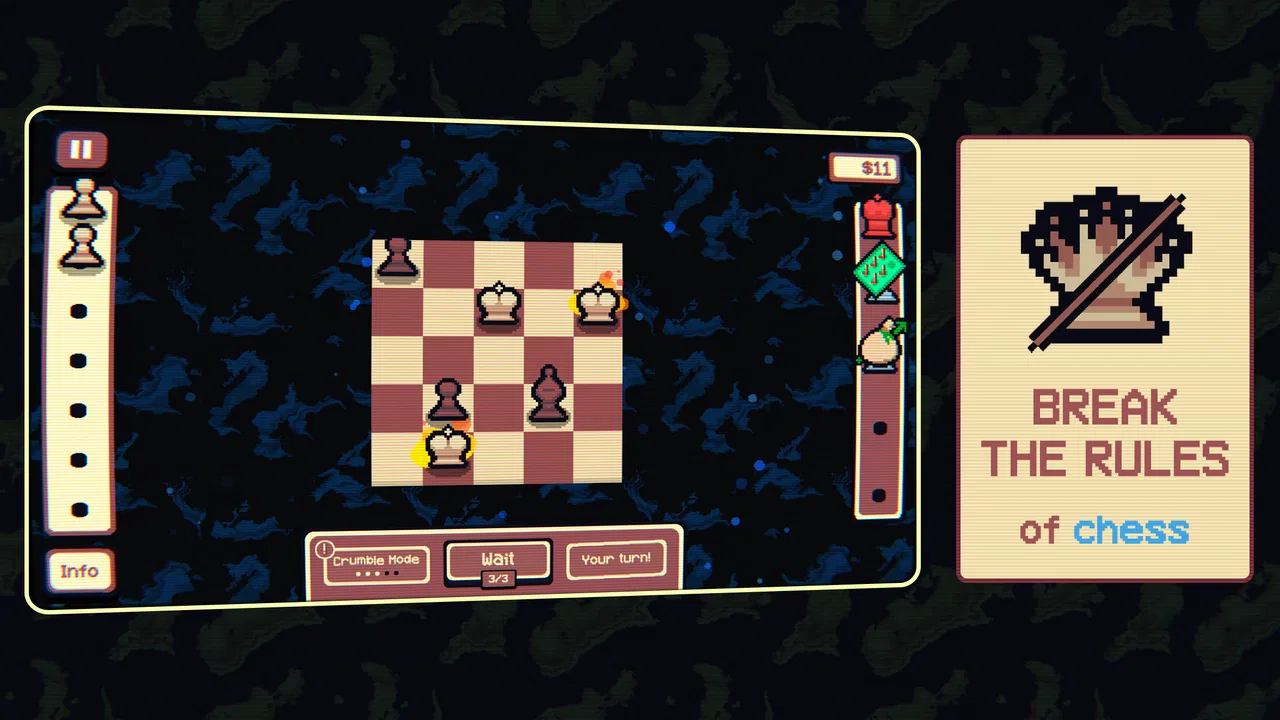
I went into Gambonanza expecting a compact chess variant, but it feels more like a puzzle roguelike that happens to use chess pieces. The board is tiny, decisions arrive quickly, and a move that looks harmless can change the whole run. That combination makes it easy to start playing during a short break, yet surprisingly difficult to master once the unusual Gambit ideas begin to matter.
Stray Fawn Studio has aimed this game at people who enjoy thinking under pressure rather than simply replaying standard chess openings. I found the appeal strongest when I stopped trying to apply normal chess habits and began treating every position as a fresh tactical problem. If you want a familiar board with a conventional match structure, this may feel strange. If you like experimenting, adapting, and recovering from imperfect decisions, it has a much more distinctive personality.
Why the first few games can feel confusing
The biggest early obstacle is not learning how pieces move. Anyone arriving from chess, checkers, or another board game will understand the basic visual language quickly. The friction comes from the reduced space and the way a small board magnifies every choice. There is less room to postpone a decision, so a move that would be merely inefficient on a full chessboard can become immediately dangerous here.
You May Also Like

 Blood Strike: 2.5 Anniversary
Blood Strike’s Loadouts Turn Every Drop Into a Tactical Gamble
A close look at Blood Strike’s custom loadouts: how fast access to signature weapons reshapes its battle royale rhythm, rewards preparation, and narrows the gap between fights.

 Pandora - Music & Podcasts
Pandora’s Music Is Easy to Start, but Harder to Recover
Pandora’s strength is its low-effort path from a seed to a station. Its weak spot is how much confidence it asks you to place in connection, setup, and quiet recovery.

 8 Ball Pool
 Is Built on Rivalries, Rematches, and Routine
A close look at the rivalries, rematches, shared routines, and unanswered safety questions that turn a quick pool match into a persistent mobile community.

 Samsung Music
’s Quiet Strength Is Playing What You Already Own
Its reach comes less from spectacle than from dependable access to a personal library. That simplicity is both the app’s strongest retention engine and its ceiling.

 AccuWeather: Weather Radar
AccuWeather Review: A Quick, Clear Forecast for Everyday Decisions
For everyday plans, the best forecast is the one you can understand quickly. AccuWeather makes rain timing, radar, and local conditions easy to act on, with a few trade-offs.

 Hill Climb Racing
Why Hill Climb Racing Still Turns Crashes Into One More Run
A tiny car, a bumpy hill and one more upgrade: Hill Climb Racing keeps resurfacing because its simple chaos makes every near-miss feel personal.
More From Our News Desk
View All News


I initially caught myself planning several moves ahead in the usual way. That approach was often too rigid. On a tiny board, the position can change so sharply that a beautiful long plan becomes irrelevant after one unexpected exchange. I had better results by identifying the immediate threat, checking which squares were actually safe, and only then considering the next opportunity.
The Gambit concept is another source of adjustment. The store summary presents the game as chess reinvented with roguelike strategy, and that description points toward the central mindset: you are not just looking for the objectively correct chess move. You are weighing risk, momentum, and the value of an unusual tactical option. The strongest move is not always the safest-looking move, especially when a bold choice opens a route to recover from a poor position.
That makes the game less suitable for someone who wants a calm, perfectly symmetrical contest. It is better for players who enjoy uncertainty and can accept that a run may teach them something even when it ends badly. I would not recommend it as a replacement for a traditional chess app if your main goal is opening study, tournament preparation, or playing long classical games.
What to learn before judging the game
Give yourself several sessions before deciding whether the design works for you. The first impression can be misleading because the board looks simple while the decision-making is not. I found that the game became more readable after I focused on patterns instead of individual pieces: blocked lanes, forced captures, exposed corners, and moves that reduce the opponent’s options.
A useful habit is to pause mentally before every capture and ask what the board will look like immediately afterward. On a small board, removing one piece can create a line for another piece, eliminate a defensive square, or make a previously irrelevant threat urgent. This is more valuable than automatically taking material whenever a capture appears.
Another practical lesson is to avoid spending every unusual option as soon as it becomes available. The temptation is understandable: a dramatic Gambit can solve the current problem and feel rewarding. I preferred keeping a flexible option in reserve when the position was merely uncomfortable rather than truly lost. That trade-off gives the game more depth than its compact presentation suggests.
Getting started without unnecessary frustration
Gambonanza is a paid board game at $5.99, so I would approach installation with the expectation of a focused experience rather than a free trial padded with unrelated distractions. It is listed for Everyone, which makes it broadly approachable, although the strategic difficulty can still challenge younger players and complete beginners. The age label describes suitability, not how quickly someone will understand the tactics.
The game requires Android 6.0 or later. Before installing, I would check the device’s Android version and leave enough free storage for the installation and any routine system work. These are simple checks, but they prevent a common mistake: blaming the game when an older operating system or a nearly full device is the real obstacle.
After installation, I recommend opening it once while connected to a stable network, even if you intend to play mainly during commutes or away from home. This gives the device a clean chance to complete the initial setup. If the game does not start correctly, close other demanding apps, restart the phone, and try again before repeatedly tapping the launch icon. Repeated attempts rarely fix a stalled process and can make it harder to tell whether the problem is temporary.
The current version is 1.3.8, so checking that the installed build matches the current store version is a sensible first troubleshooting step. If an update is waiting, install it before judging performance. I would also avoid restoring a large number of apps or changing several device settings at the same time; one change at a time makes the cause of a problem much easier to identify.
A practical routine for a short play session
My favorite way to use the game is in a defined twenty-minute window. I start with one run, play cautiously through the opening positions, and treat the first difficult encounter as a learning exercise rather than something that must be solved perfectly. If I lose, I take a moment to identify the first irreversible mistake instead of immediately restarting in frustration.
This routine works well because the board encourages quick reactions, but the strategic lessons need a little reflection. A run can be short enough for a lunch break, yet a single decision may stay in my mind afterward. That makes it a good fit for people who want a game with meaningful choices but do not always have time for a complete traditional chess match.
For a longer session, I would change the goal. Rather than chasing a flawless sequence, try deliberately testing one idea: preserve a defensive piece, accept an awkward exchange, or delay a Gambit until the position becomes critical. This turns failure into useful information. It also prevents the game from becoming a repetitive search for one supposedly perfect opening.
Players coming from standard chess should be especially careful with automatic habits. Developing pieces, protecting material, and controlling the center remain useful ideas in spirit, but the tiny layout changes their priority. A move that looks principled in ordinary chess may simply waste a turn here. I found that flexibility mattered more than following a familiar opening routine.
Recovering when a run starts going wrong
When a position deteriorates, my first step is to stop looking for a spectacular rescue. I scan for the most immediate threat, then identify which piece or square is causing it. Sometimes the best recovery is not an attack but a move that limits the opponent’s next choice. On this board, reducing the number of dangerous possibilities can be more valuable than gaining a small advantage.
If the game appears stuck, respond in stages. First, wait briefly to see whether the interface catches up. Next, leave the current screen and return if the game allows it. If that does not help, close the app normally and reopen it. A full device restart is the next reasonable general check. I would not jump straight to clearing app data, because that can remove local progress or settings in apps that store them locally.
Before reinstalling anything, make sure you understand what may happen to the current run. A reinstall is a last resort, not a routine refresh. The same caution applies to clearing storage from the Android settings. It can solve corrupted local files, but it can also erase information that cannot be recovered. If the problem only affects one position, restarting that run is safer than taking a drastic device-level action.
One of the more useful recovery habits is recording the exact moment a problem appears. Note whether the issue happens during launch, after a move, when changing screens, or only after the device has been idle. That distinction helps separate a repeatable game issue from a temporary phone problem. It also prevents vague troubleshooting based on the assumption that every failure has the same cause.
When the phone, not the game, is responsible
Not every stutter or failed launch points to Gambonanza. Older hardware, aggressive battery management, low free space, and many open background apps can all affect a board game, even one with a visually compact presentation. If other apps are also slow, the wider device environment deserves attention before the game is blamed.
Battery-saving modes can be particularly confusing. They may restrict background activity or delay routine processes, making an app appear unreliable when the phone is simply trying to conserve power. I would test the game after charging the device, closing unnecessary apps, and temporarily using the normal performance setting. If the behavior changes, the device configuration is a stronger suspect than the board game itself.
Network conditions can also complicate diagnosis. A connection may be needed for part of the setup or store-related activity even when the core play experience feels suited to offline moments. If something fails during the first launch, try a stable connection and avoid switching repeatedly between networks. If the game works normally afterward, the original issue may have been setup-related rather than a problem with the game’s rules or board.
There is also a human cause: fatigue. I made more mistakes when I treated every position as an emergency and rushed because the board looked small. Taking a short break often improved my results more than changing strategy. This is not a game that rewards frantic tapping. Its compact format hides a need for careful observation.
How it compares with ordinary board-game choices
Compared with a normal chess app, this game offers less value for formal improvement and more value for improvisation. A standard chess app is the better choice if you want recognizable openings, ranked matches, engine analysis, or a direct connection to established chess rules. Gambonanza is more appealing when you want each decision to feel like part of a changing challenge rather than one move in a familiar competitive framework.
Compared with casual board games, it demands more concentration. It is not the kind of title I would hand to someone looking for a purely relaxing, luck-driven experience. The board is small, but the consequences are not always obvious. Players who enjoy tactical card games or roguelike decision-making may adapt faster than people who usually choose traditional family board games.
Its price also changes the comparison. At $5.99, the decision is less about whether it costs anything and more about whether this particular style of replayable strategy matches your habits. I would rather pay for a focused game I return to than collect several free alternatives I rarely open, but that judgment depends on enjoying experimentation. If you want a broad collection of modes or a social board-game hub, this is probably too specialized.
Who will get the most from it
The best audience is a player who likes chess ideas but does not need chess to remain orthodox. You should be comfortable losing while learning, reconsidering a plan after every exchange, and choosing an imperfect option because it creates a better future position. The game is also a good match for people who prefer short, concentrated sessions over long campaigns that require a large uninterrupted block of time.
It can work for experienced chess players, but not because it simply transfers their existing skill. Strong players may recognize tactical relationships quickly, yet their automatic assumptions can become a handicap. Beginners may also enjoy it if they are willing to learn through trial and error, though someone seeking a gentle tutorial-first introduction to board strategy may find the early experience demanding.
I would skip it if your priority is online competition, detailed chess instruction, or a relaxing game that never punishes experimentation. I would also skip it if you dislike roguelike structure in general. The appeal depends on adapting to changing situations and accepting that progress can come from a failed attempt. Without that mindset, the same design may feel arbitrary rather than exciting.
My verdict after settling into its rhythm
Gambonanza succeeds because it makes a familiar board feel unfamiliar without discarding the satisfaction of planning. Stray Fawn Studio has created a game where the limited space is not merely a visual gimmick; it changes how I evaluate danger, sacrifice, and recovery. The most rewarding moments come when a position looks lost, a risky choice creates one narrow route forward, and that route works because I had preserved enough flexibility.
There is friction. The opening learning curve is sharper than the simple presentation suggests, and players looking for conventional chess tools may find the design too far removed from their usual alternatives. Setup or performance problems should also be checked methodically rather than assumed to be gameplay faults. Those limitations are important, especially for someone deciding whether a focused paid game belongs on a particular phone.
The reception is encouraging, with an average of 4.8 from around 7.8 thousand ratings and more than 50 thousand installs. Those figures suggest that the unusual idea has found a real audience, although popularity alone does not make it suitable for every chess fan. I would treat that response as a reason to investigate the game, not as a substitute for understanding its style.
For me, the deciding question is simple: do you want chess as a stable rule set, or do you want a compact strategy game that uses chess as its starting language? If it is the second option, the $5.99 purchase is easy to justify. I recommend it to patient solo players who enjoy tactical surprises, short sessions, and learning from mistakes. I would point traditionalists toward a standard chess app instead, but for everyone else, this is a refreshingly focused board game with enough uncertainty to keep familiar moves from becoming automatic.
FAQs for Gambonanza
01What is Gambonanza, and how does it work?
Gambonanza is an online casino-style gaming platform focused on slot games and other chance-based entertainment. After opening the app or website, users can browse the available games, review their rules and betting limits, and select a title to play. The exact game catalog, interface, and available features may vary depending on your country, device, and the version you install.
02Is Gambonanza safe and legitimate to use?
Before creating an account or depositing money, check whether Gambonanza is legally available in your region and identify the operator responsible for the service. Review its licensing information, privacy policy, terms and conditions, and security practices. You should also confirm that the official download source is being used, because unofficial APK files or copied websites may present security, payment, or account-related risks.
03Can I play Gambonanza for free, or is real money required?
Availability of free play depends on the version and market in which Gambonanza is offered. Some casino platforms provide demo modes, promotional credits, or social-style games, while others primarily support real-money wagering. Carefully check the game lobby and account terms before playing. If deposits are available, remember that bets involve financial risk and should only be made with money you can afford to lose.
04What payment methods and withdrawal options does Gambonanza support?
Payment and withdrawal methods can differ according to your location, currency, account verification status, and the local rules that apply to the service. Common options may include cards, bank transfers, or approved digital payment providers, but you should not assume every method is supported. Read the cashier information for fees, minimum limits, processing times, identity checks, and any wagering requirements attached to bonuses.
05What should I know about age limits, bonuses, and responsible play on Gambonanza?
Gambonanza may be restricted to adults who meet the legal gambling age in their country, and identity or age verification can be required before certain features are unlocked. Bonuses commonly include conditions such as expiration dates, deposit requirements, or wagering rules, so read the full promotion terms first. Set personal spending and time limits, avoid chasing losses, and stop playing if it no longer feels controlled or enjoyable.
Pros
- Simple gameplay that is easy for new players to understand.
- Short rounds make it convenient for quick gaming sessions.
- Bright visuals and animations create an entertaining casino atmosphere.
- Offers a variety of game modes to keep the experience from feeling repetitive.
- Runs well on many modern Android and iOS devices.
Cons
- Progress may feel slow without frequent play or optional purchases.
- Some features can be limited by in-game currencies or energy systems.
- Random outcomes may frustrate players seeking a more skill-based experience.
- Notifications and promotional offers may become distracting over time.
- Availability of certain features may vary by region or device.

Gambonanza
Gallery